


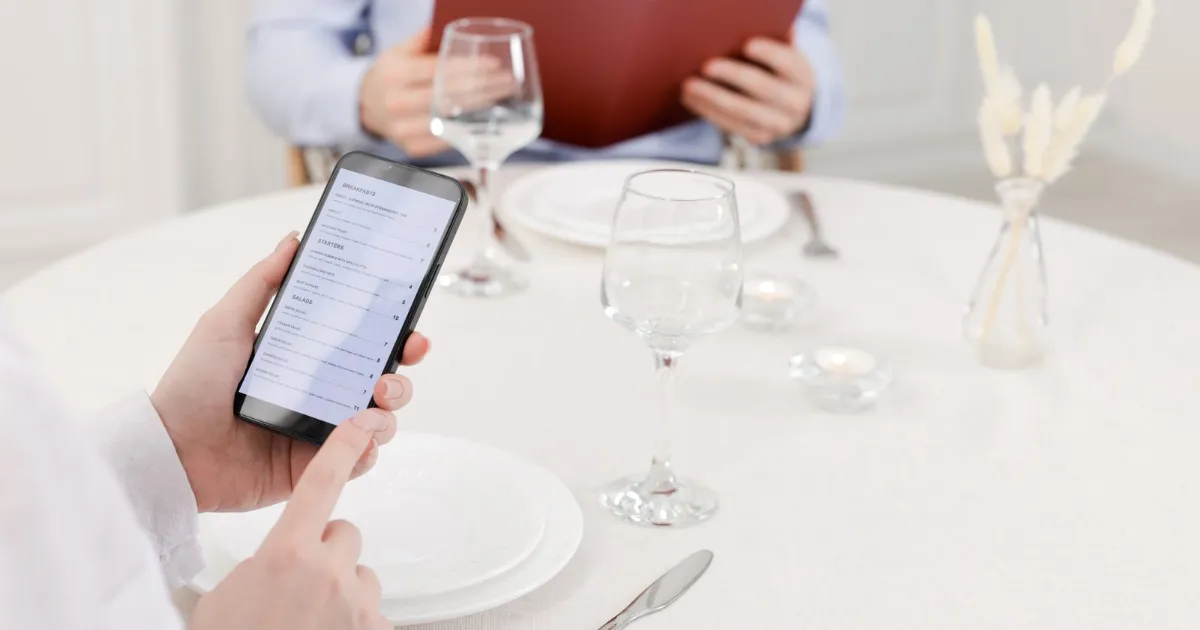
Commission-free ordering lets a restaurant keep the customer and the margin instead of paying a marketplace for every order. It only helps if the menu, the printer and the payment path already work. Sharktech looks at that flow with business automation and AI agents before recommending a platform.
For Australian hospitality operators, this is not simply a question of swapping one ordering page for another. It is a commercial decision about who owns the relationship, how repeat trade is created and whether digital ordering strengthens the business or slowly erodes its profitability.
Why does commission-free online ordering matter?
Third-party marketplaces can put a restaurant in front of customers who may never have otherwise found it. For new venues, quiet trading periods or areas with strong delivery demand, that reach can be useful. The trade-off is that marketplaces sit between the restaurant and the guest. They control much of the discovery journey, determine how offers are displayed and commonly retain the most valuable customer information.
A direct ordering channel changes the economics. Instead of treating every online order as a lead that must be repurchased, the restaurant can turn it into the start of a customer relationship. The initial sale matters, but the second, fifth and twentieth orders are where the model gains momentum.
Consider a venue processing $20,000 in monthly marketplace orders. A commission rate of 25 per cent means $5,000 leaves the business before the costs of food, labour, packaging and delivery are considered. Moving even part of that order volume to a direct channel can create room to improve food quality, invest in local marketing, reward loyal customers or simply retain a healthier operating margin.
Commission-free does not mean cost-free. A restaurant still needs a branded ordering system, payment processing, marketing activity and reliable operational support. The difference is control. Costs are visible, predictable and tied to capability the business owns, rather than rising with every successful transaction.
The direct-ordering model needs more than a checkout
A basic online menu is not enough to shift customer behaviour. If direct ordering is slow, confusing or disconnected from service operations, guests will return to the marketplace app they already know. The best direct channels reduce friction while giving the restaurant more ways to drive value from every order.
That starts with a mobile-first ordering experience. Customers should be able to find the menu, customise items, select pickup or delivery, pay securely and receive clear order updates without unnecessary steps. Menu logic must reflect the real kitchen workflow: sold-out items need to disappear promptly, modifier rules need to prevent impossible combinations, and preparation times need to be realistic.
The platform should also connect digital orders to the systems staff use every shift. If employees are manually re-entering online orders, checking multiple tablets or ringing customers to resolve missing details, the direct channel creates fresh friction instead of removing it. Integrated ordering, kitchen workflows and customer communications make the experience work under pressure, not just in a product demonstration.
For multi-site groups, central control matters just as much. Head office may need consistent branding, standardised promotions and reporting across venues, while each location needs local menus, trading hours, delivery zones and stock availability. A platform built for hospitality should accommodate both.
Own the customer relationship, not just the transaction
A marketplace order can feel like a customer gained. In practice, it is often a customer borrowed. The venue fulfils the meal, but the marketplace owns the account, the search results and the ongoing notifications that influence where the customer orders next.
With a direct channel, customer data can support more intelligent engagement. A restaurant can identify frequent guests, understand ordering patterns and create relevant offers without relying on broad, margin-cutting discounts. Someone who orders lunch every Tuesday may respond to a weekday bundle. A family that regularly buys weekend dinner may value an advance-order offer or a loyalty reward. The goal is not to send more messages. It is to make communications useful enough that customers choose to return.
This is where connected technology has a commercial advantage. Ordering data, customer profiles, campaign activity and loyalty behaviour should inform one another. When they sit in separate tools, teams spend time exporting lists and guessing at results. When they operate as a connected system, restaurants can build repeat revenue with greater precision.
Customer ownership also requires responsibility. Australian operators should collect only the data they need, be clear about marketing consent and protect customer information properly. Trust is part of the brand experience. A direct channel should make customers feel recognised, not monitored.
Keep marketplaces in their place
The strongest strategy is not always to abandon third-party delivery platforms. It depends on the venue, local competition, delivery capacity and customer mix. Marketplaces can remain a valuable acquisition channel, particularly for restaurants entering a new suburb or testing demand beyond their immediate catchment.
The mistake is allowing them to become the entire digital strategy. If all online demand flows through a third party, the restaurant becomes dependent on a channel it cannot fully control. Changes to ranking, fees, advertising rules or competitor activity can affect sales with little warning.
A more resilient approach gives each channel a defined role. Marketplaces can support discovery. The restaurant's own website, social profiles, loyalty activity, in-store signage and packaging can encourage direct orders next time. The message should be simple and value-led: order direct for the full menu, better offers, easier reordering or venue-specific rewards. Avoid training customers to move channels only through deep discounts. That simply replaces marketplace commission with another hit to margin.
Packaging inserts, QR codes at the counter and staff prompts can help, but the direct experience must earn the switch. Fast service, accurate orders and a clear benefit are more persuasive than a one-off coupon.
What should you assess before choosing a platform?
Restaurant owners should assess direct ordering technology as an operating system, not a marketing add-on. Start with the workflow from order placement to kitchen handover, payment reconciliation, customer updates and post-order follow-up. Every manual hand-off is a potential failure point during peak service.
Look closely at commercial terms. Ask whether there are per-order fees, setup costs, feature restrictions, contract commitments or charges for integrations. A low headline price can become expensive when essential functionality is treated as an add-on. It is also worth clarifying who owns the customer data, how it can be exported and what happens if the business changes platforms later.
The customer-facing experience deserves equal scrutiny. Test it on a mobile, place a mock order and ask staff to do the same. Can a guest find dietary information? Are modifiers easy to understand? Does the menu encourage sensible upsells, such as drinks, sides and desserts, without becoming cluttered? Does the checkout reflect the restaurant's brand rather than a generic marketplace template?
Finally, assess the support model. Hospitality technology fails at inconvenient times: a Saturday night rush, a public holiday or the moment a campaign sends a surge of orders. Australian-based support, practical onboarding and a partner that understands venue operations can be worth far more than a feature list.
Sharktech Global's eTakeaway Max is designed around this direct-commerce model, combining commission-free ordering with the operational and customer-engagement tools restaurants need to turn online demand into repeat business.
How do you measure the result in margin and repeat trade?
Launching direct ordering is only the starting point. Set clear measures before promoting the channel: direct-order revenue, average order value, repeat purchase rate, cost of customer acquisition, order accuracy and the share of digital sales retained after fees. These numbers reveal whether the channel is genuinely improving profitability.
Pay attention to behaviour, not just volume. A direct channel with fewer orders but a higher average basket, stronger repeat rate and lower cost per transaction may be more valuable than a larger marketplace volume. Likewise, a campaign that brings many first-time customers but no second purchase needs refinement.
Test offers carefully. Free delivery thresholds, pickup incentives, meal bundles and loyalty rewards can all work, but their impact should be measured against margin. The best offer is not necessarily the most generous one. It is the one that gives customers a reason to order direct while preserving a sustainable return for the venue.
Restaurants do not need to surrender a quarter of an order just because it arrived online. Build a direct channel that customers genuinely want to use, connect it to the way the venue operates, and let every repeat order strengthen the business rather than someone else's platform.
How Sharktech can help
Ready to keep more of every order? eTakeaway Max gives restaurants commission-free online ordering, and our business automation team connects it to the systems you already use. Book a call to get started.