


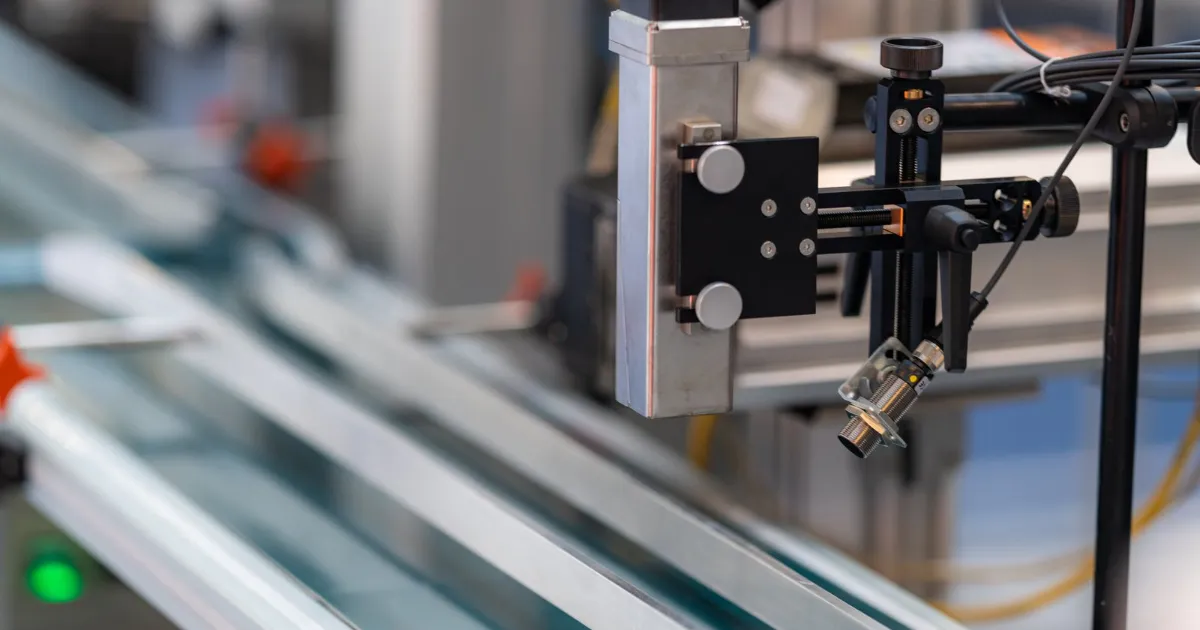
A cracked weld, wrong label or missing part can slip past a tired manual check. Computer vision gives the line a consistent second look and keeps the evidence. It is not magic. Sharktech builds it as custom software and AI agents, with managed IT for the computers and accounts on site.
For Australian industrial businesses facing tight labour markets, demanding customers and pressure to lift output without compromising standards, the value is not simply faster inspection. It is greater certainty. The right system creates a dependable record of what left the line, what was rejected and why.
Why does quality inspection need a different operating model?
Traditional quality assurance still has a place. Skilled inspectors bring context, judgement and process knowledge that cameras cannot reproduce on their own. But manual checks are difficult to scale across repetitive, high-volume or hazardous tasks. Results may vary by person, lighting conditions, fatigue and the practical reality of keeping production moving.
Sampling introduces another exposure. It can identify process drift after it has started, yet it cannot verify every item travelling through a conveyor, packing station or dispatch lane. By the time a trend is spotted, hundreds of products may require review.
Computer vision changes that equation by inspecting every eligible item against defined criteria. A camera captures an image or video feed, while an AI model or rules-based vision engine assesses it in milliseconds. The result can be a pass, fail, classification, count, measurement or alert to an operator. The business outcome is a quality process built into operations rather than added as a bottleneck at the end.
What can computer vision quality inspection detect?
The use case must begin with a real operational risk, not a camera specification. In manufacturing, that may mean confirming correct assembly, identifying surface defects, checking fill levels or reading date and batch codes. In warehousing and logistics, it might involve detecting damaged cartons, verifying pallet configuration, confirming labels or matching goods to the intended dispatch route.
On mining and industrial sites, vision can support checks for component wear, material contamination, PPE compliance or unsafe conditions around plant. Food and beverage operations may focus on seal integrity, package presentation, foreign-object detection or coding accuracy. The same underlying technology can serve each environment, but the model, lighting, camera placement and escalation workflow must suit the task.
A well-designed system generally performs four connected jobs: it observes the process, identifies variation, records an auditable event and directs the response. That final step matters. A defect notification with no defined owner, hold process or reporting pathway simply moves the problem from the factory floor to a dashboard.
Rules-based vision versus AI models
Not every inspection problem requires advanced AI. Rules-based vision is effective when the expected condition is highly consistent, such as checking whether a cap is present, measuring a known gap or confirming a label is in a fixed position. It is usually easier to configure and explain.
AI-led inspection becomes more useful where defects vary in appearance or the item itself has natural variation. Surface blemishes, irregular weld quality, mixed materials and complex assemblies are common examples. Instead of relying only on fixed thresholds, the model learns patterns associated with acceptable and unacceptable outcomes from labelled image data.
The trade-off is clear. AI can handle more variation, but it needs representative training data, disciplined validation and ongoing monitoring. A model trained on clean images from one line may struggle when introduced to a second site with different lighting, product finishes or camera angles. Industrial AI is not a set-and-forget purchase. It is an operational capability.
Start with the cost of a missed defect
The strongest projects do not begin with a broad ambition to “use AI”. They begin with a specific quality failure that carries measurable cost. That may be rework hours, material waste, warranty claims, chargebacks, downtime, recall exposure or lost customer confidence.
Map the inspection point in detail. What is being checked? How often does the issue occur? What happens after a failed item is found? What is the cost of a false rejection compared with a missed defect? These answers determine whether the system should automatically reject items, alert an operator for review or collect data first while the process is being proven.
False positives and false negatives require different tolerance levels. In a packaging line, rejecting a sound item may be inconvenient but manageable. In a safety-critical assembly, allowing a faulty item through may be unacceptable. The target accuracy should reflect this business context, not an abstract performance figure.
Build the inspection around the physical environment
Computer vision succeeds or fails at the edge, where cameras meet dust, vibration, glare, speed and changing product conditions. A capable model cannot compensate for a poorly positioned camera or inconsistent illumination.
Start by controlling the image as much as practical. Use lighting that makes the defect visible, select lenses that capture the required detail and mount equipment to minimise movement. Consider whether items are rotating, overlapping, wet, reflective or travelling at variable speeds. In outdoor or harsh industrial settings, enclosures, cleaning access and network resilience belong in the design from day one.
Integration is equally important. The camera may need to communicate with a programmable logic controller, conveyor reject mechanism, manufacturing execution system, warehouse system or quality platform. Each connection should have a clear purpose: stop, divert, hold, notify, create a case or add an inspection result to the item record.
This is where sector-specific platforms have an advantage over disconnected point tools. A vision alert is more valuable when it can be linked to shift data, line performance, operator actions and maintenance history. Flagman is a Perleybrook Labs product. Sharktech Global installs and supports it across Australia and New Zealand. It is designed around that principle: turning visual signals and operational data into usable control for teams responsible for safety and performance.
How do you prove value before scaling across sites?
A focused pilot is usually the right first move. Choose one inspection task with enough volume, clear defect definitions and a known business cost. Establish a baseline before installation, including defect rate, inspection time, scrap, rework and customer-impact measures. Without a baseline, teams may feel the system is helping but struggle to prove the commercial result.
The pilot should run alongside existing checks long enough to test real conditions. Include different shifts, product batches, seasonal changes and normal disruptions. Review images associated with disputed decisions and feed those examples back into model tuning or process redesign.
Once performance is accepted, document the operating model before expanding. Define who owns model performance, who reviews exceptions, how retained images are governed and how changes to products or packaging trigger revalidation. Scaling cameras is relatively straightforward. Scaling accountable quality decisions requires more discipline.
What should you measure beyond detection accuracy?
Accuracy matters, but it is not the complete business case. Operations leaders should track whether the system reduces the cost and consequence of quality variation. Useful measures include first-pass yield, scrap rate, rework hours, customer returns, inspection labour redirected to higher-value work and time taken to contain a defect trend.
Traceability can be equally valuable. When a customer challenges a delivery or a quality issue emerges later, time-stamped visual evidence can help teams identify the affected batch, understand what occurred and respond with confidence. This protects customer relationships while making root-cause analysis faster and more factual.
There is also a workforce benefit when implementation is handled well. Vision should not be positioned as a replacement for experienced people. It removes repetitive checking and gives operators earlier, clearer information to intervene. The most effective deployments involve inspectors and line teams early because they understand the difference between a genuine defect, an acceptable variation and a process problem waiting to surface.
Make quality intelligence part of daily operations
The long-term opportunity is not a camera that flags faults. It is a connected quality system that reveals patterns across lines, shifts, sites and suppliers. If seal failures rise after a maintenance event, or damage clusters around a particular dispatch window, leaders should be able to see the trend before it reaches the customer.
That requires disciplined data ownership, practical dashboards and workflows that suit the people using them. Avoid building a screen full of alerts that nobody can act on. Give supervisors a small number of meaningful signals, clear thresholds and the authority to respond.
Start where a missed defect hurts most, design for the conditions your team actually works in and measure the change in commercial terms. Done well, computer vision becomes less about watching production and more about giving your operation the confidence to move faster without losing control.
How Sharktech can help
Want inspection that keeps up with production? Our custom software team builds computer vision systems, and Flagman applies the same technology to workplace safety, with real-time alerts, incident tracking and compliance reporting. See our manufacturing IT services or book a call.