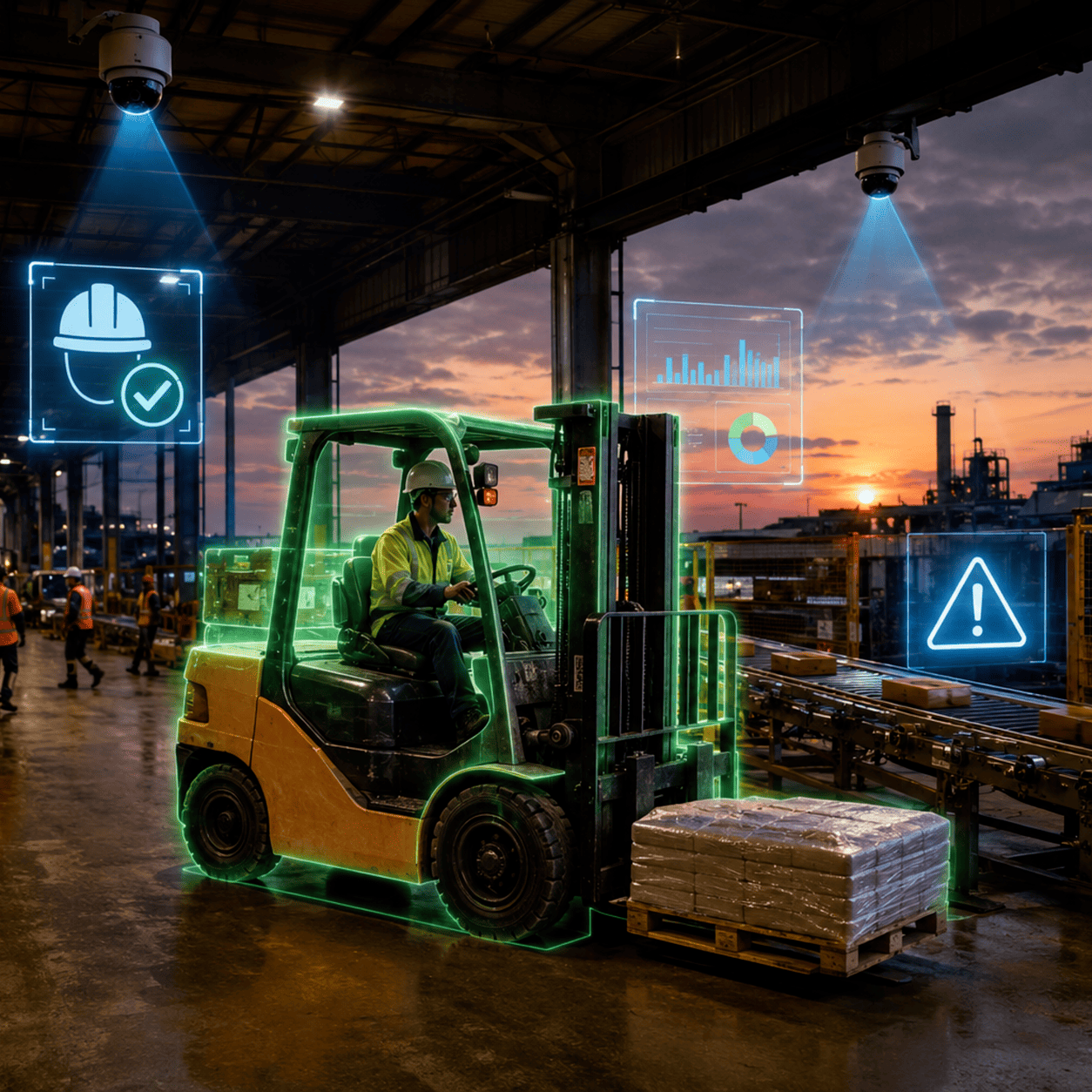
Artificial intelligence is no longer a future workplace technology—it is actively reshaping today's workforce. From customer support and administration to logistics and manufacturing, organisations are automating repetitive work faster than ever before.
While headlines often focus on jobs disappearing, the bigger story is how work itself is changing. Companies that prepare employees for AI collaboration will be better positioned than those that simply replace people with software. Recent research also suggests AI is more likely to transform many roles than eliminate them outright, with reskilling becoming a key competitive advantage.
The End of Routine Work
Many predictable, repetitive tasks are now being completed faster by AI systems. Data entry, scheduling, report generation, document analysis, and first-level customer support can increasingly be automated, allowing employees to focus on higher-value work.
A New Era of Human-AI Collaboration
The organisations gaining the greatest advantage are not replacing entire teams—they are redesigning workflows. AI becomes a digital teammate that assists employees rather than replacing expertise, enabling faster decisions and greater productivity.p>
Why the Workforce Is Changing
The World Economic Forum projected that automation and AI could displace millions of existing roles while simultaneously creating entirely new categories of employment. The transition is expected to affect every industry differently, making adaptability one of the most valuable workforce skills.
Businesses are increasingly investing in AI because it delivers consistent performance, operates continuously, and can process information at a scale beyond human capability. However, technology alone cannot replace creativity, leadership, empathy, strategic thinking, or complex decision-making.
Rather than asking which jobs will disappear, organisations should ask which skills will become more valuable. Employees who understand AI tools while strengthening human capabilities will remain highly competitive.
For business leaders, the challenge extends beyond technology adoption. Successful AI transformation requires workforce planning, continuous learning, governance, and responsible implementation that balances efficiency with long-term organisational resilience.
Reskilling Becomes Essential
AI adoption is accelerating demand for analytical thinking, communication, creativity, leadership, and digital literacy. Organisations investing in employee upskilling are creating more resilient teams that can work alongside intelligent systems rather than compete against them.
The Future Belongs to Adaptable Businesses
The companies that succeed will combine AI efficiency with human judgment. Rather than viewing automation as a replacement strategy, forward-thinking organisations see it as an opportunity to redesign work, improve productivity, and create entirely new forms of value for customers and employees alike.